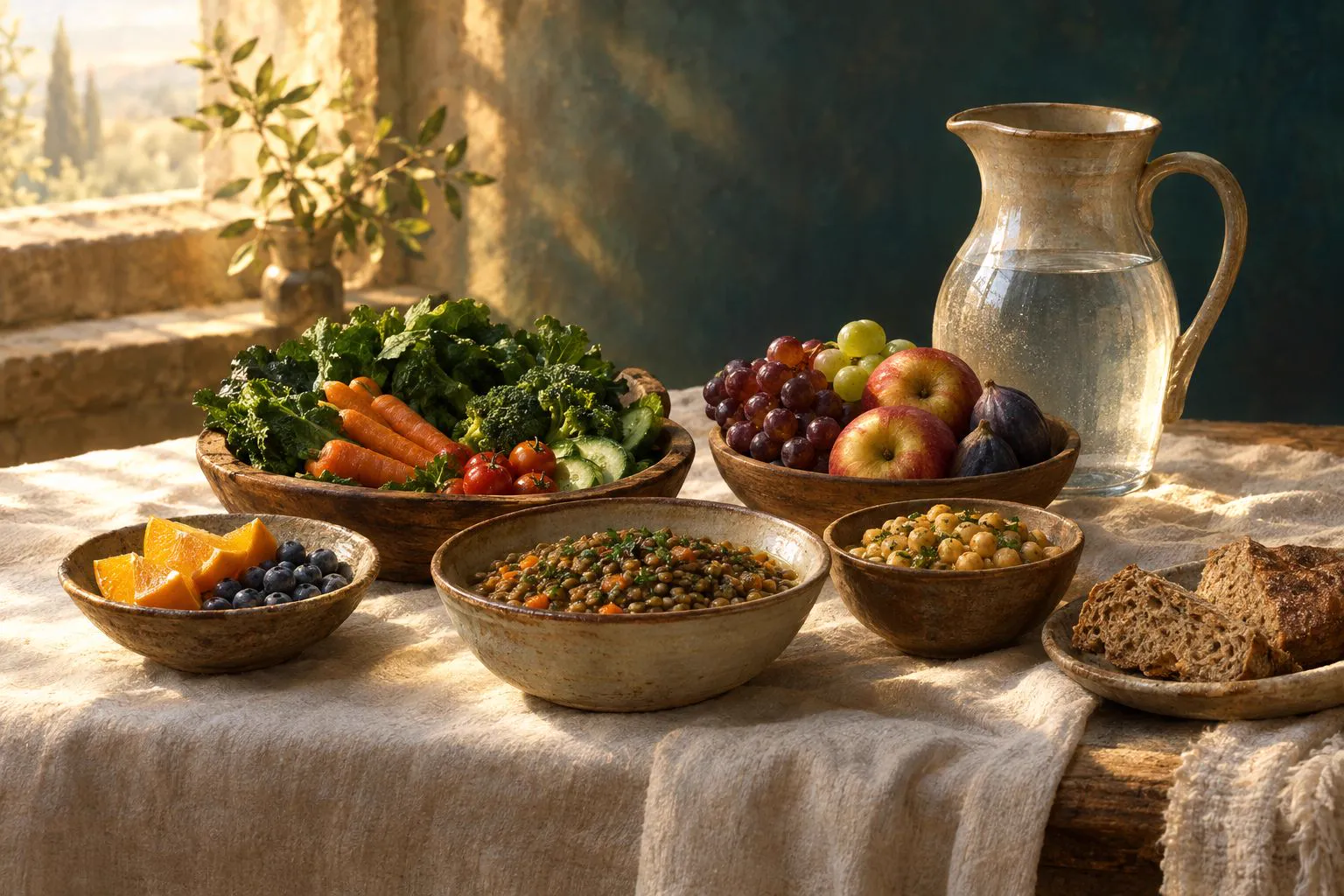
During Ramadan, Muslims eat suhoor, a meal before dawn, and then fast from dawn to sunset. Even Muslim organisations recommend that it be balanced and nutritious, with slow-release foods and water, rather than a feast (Islamic Relief — What Is Suhoor?). Jewish families also eat a pre-fast meal before Yom Kippur, made of easily digested foods (Chabad.org — Seudah Hamafseket, the Pre-Fast Meal).
What does the Bible say? Scripture does not command a meal before a fast, and it does not forbid one. Eating a normal, sensible meal before you begin is fine.
What Scripture warns against is overindulging. Jesus warns against hearts “overcharged with surfeiting” (overeating), and Proverbs warns against being among “riotous eaters of flesh.” Loading up so that you will not feel hungry misses the point. Biblical fasting is “afflicting the soul” and humbling yourself. The hunger is part of what reminds you to pray.
Practical help: Cru advises eating smaller meals before a fast, avoiding high-fat and sugary foods, and eating raw fruits and vegetables for two days beforehand (Cru — How to Begin Your Fast).
Remember also that Christian fasting is different in purpose. We do not fast to earn merit or acceptance. We fast as people already accepted through Jesus Christ, seeking more of Him.
“And take heed to yourselves, lest at any time your hearts be overcharged with surfeiting, and drunkenness, and cares of this life, and so that day come upon you unawares.”
“And this shall be a statute for ever unto you: that in the seventh month, on the tenth day of the month, ye shall afflict your souls, and do no work at all, whether it be one of your own country, or a stranger that sojourneth among you: For on that day shall the priest make an atonement for you, to cleanse you, that ye may be clean from all your sins before the LORD. It shall be a sabbath of rest unto you, and ye shall afflict your souls, by a statute for ever.”