Teaching Library
Dominion Hour

Return to the Father

Luke 15:11–32November 3, 2026

An interactive study of a two-part service from Dominion Hour with Prophet Prince Amo David: the robe, the ring, and the sandals the father gave his returning son in Luke 15. Includes the teaching with quotes from the service, a Greek and Hebrew word study, every passage in full (KJV), and a ten-question workbook with personal reflections.

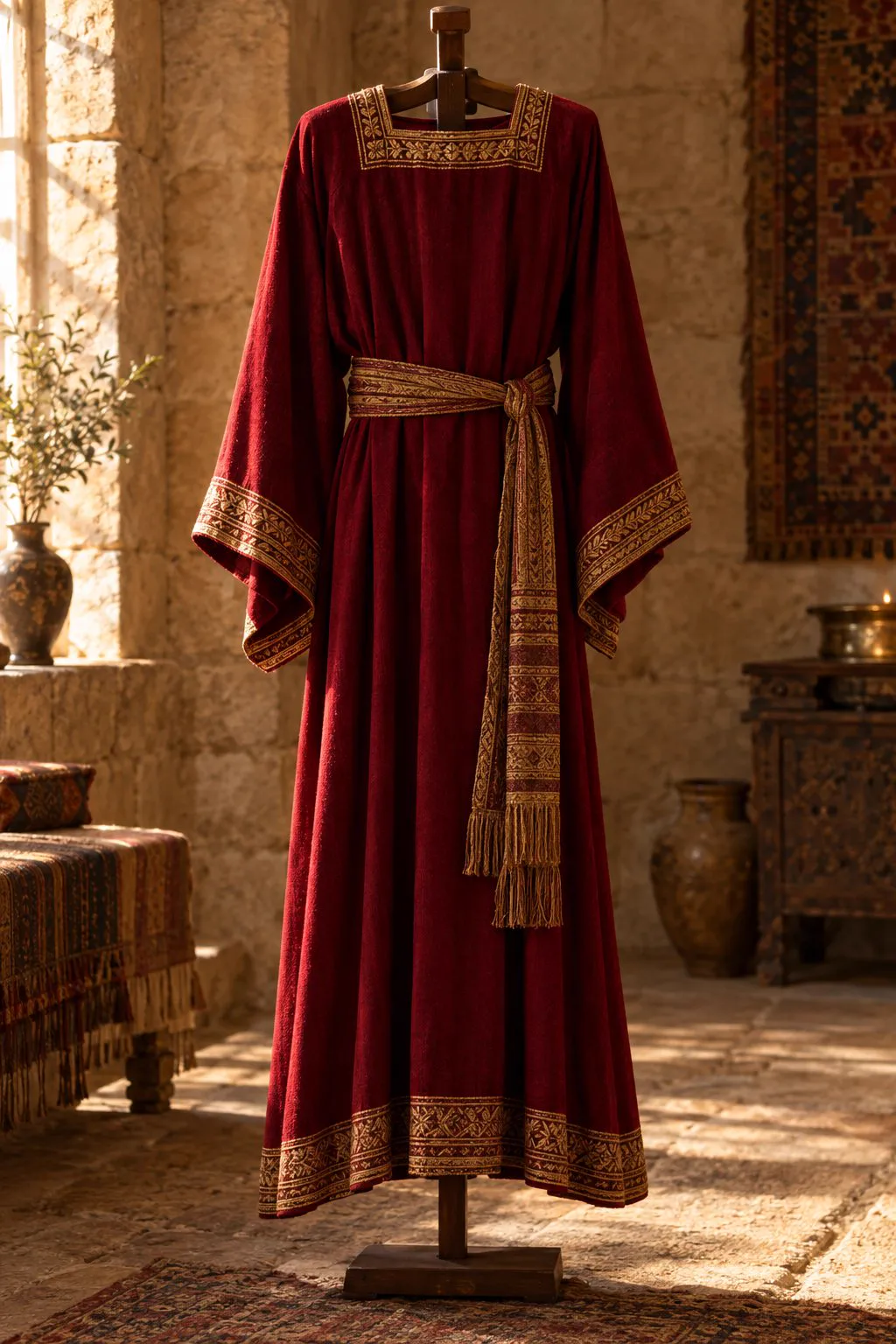
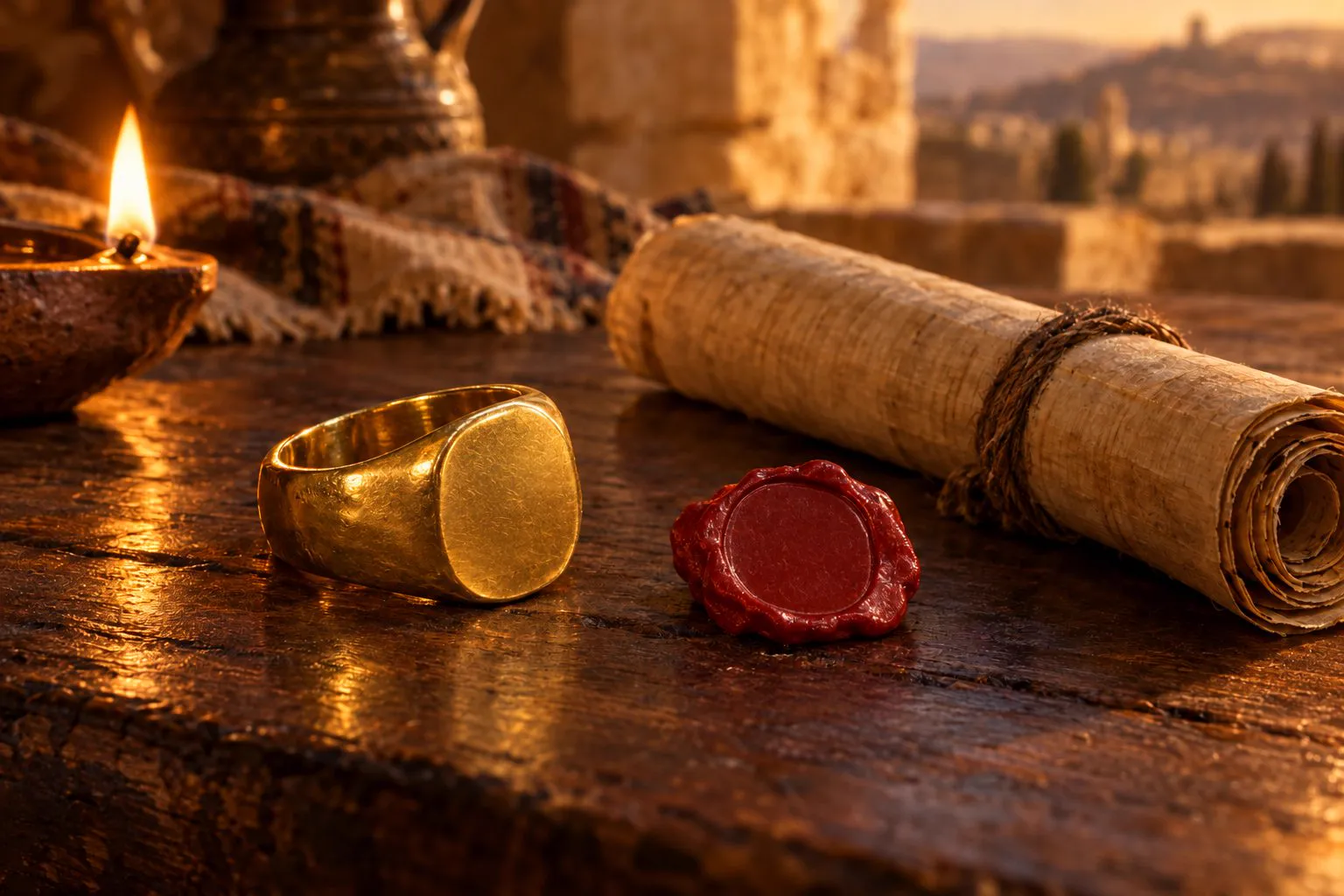
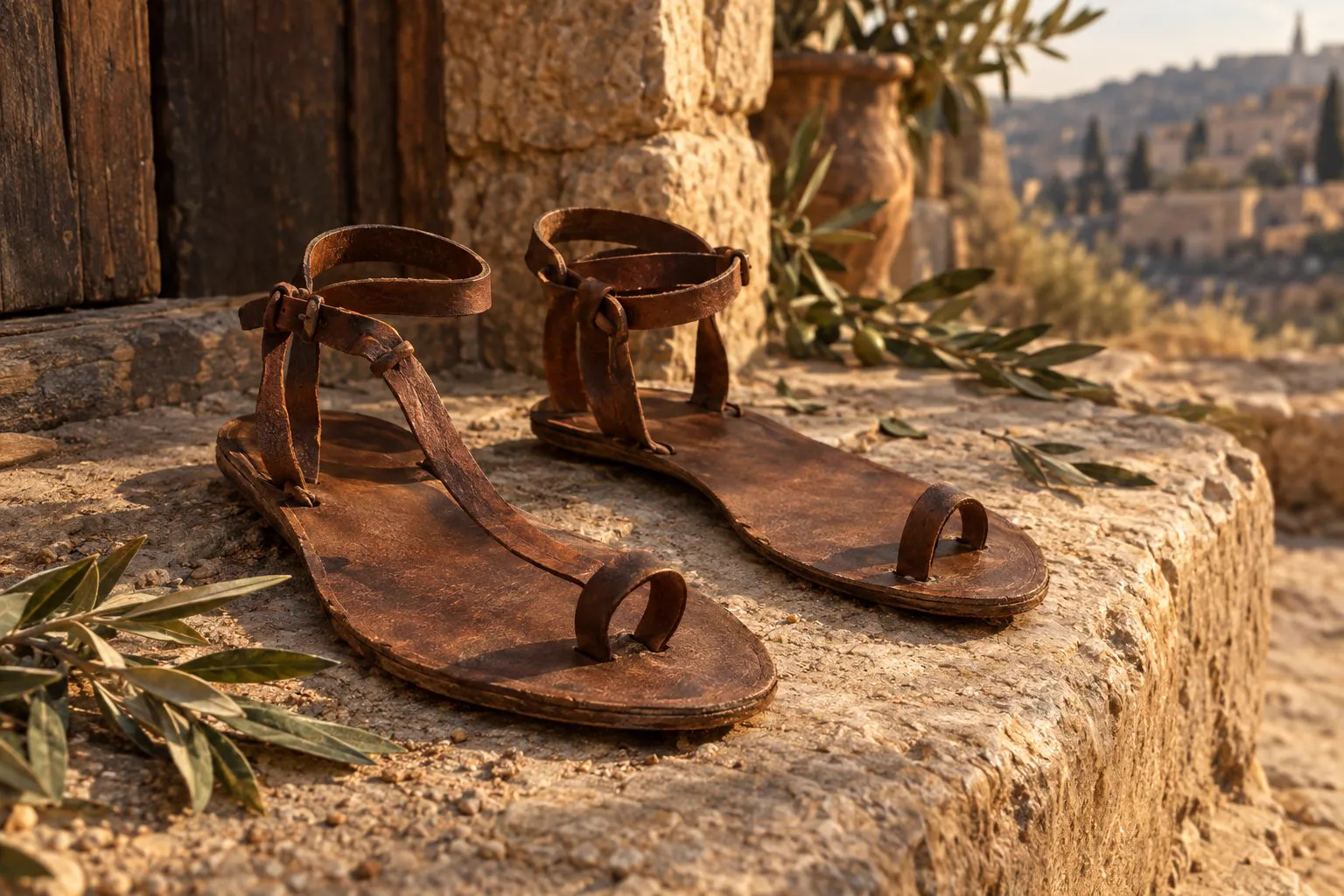
A crimson and gold robe, a gold signet ring, and leather sandals resting on a stone beneath golden rays, with the father’s house on the hill beyond

Interactive study

The robe, the ring, and the sandals

Come back to the Father · The mountain experience

0%

0 of 44 studied

How to read this study
Scripture (KJV)
The Bible text, quoted exactly from the King James Version. Each passage is marked as referred to in the service, shown in the service guide, or added by the editor.
Quoted in the Service
Exact words from the service. Part 1 quotes were checked word for word against the recording. Part 2 quotes are taken from the written guide to the service.
Ministry Interpretation
A summary of the teaching from Dominion Hour with Prophet Prince Amo David, taken from the service guide and the recording. These are not his exact words.
Service Instruction
An instruction given in the service, as summarized in the guide.
Editor’s Note
Suggested readings, discussion prompts, the word study, and the workbook questions and explanations, prepared for this study. These were not spoken in the service.

About the source

This study was prepared from a written guide to the service and from the recording of Part 1. The recording itself is not published. The teaching is from Dominion Hour with Prophet Prince Amo David. Names of participants and stories shared in the room are left out.

Return to the Father — original interactive study

King James Version

Scripture in Full

The story from Luke 15 and the other passages named in this study, written out in full from the King James Version.

Scripture (KJV)

Luke 15:11–32

11And he said, A certain man had two sons:

12And the younger of them said to his father, Father, give me the portion of goods that falleth to me. And he divided unto them his living.

13And not many days after the younger son gathered all together, and took his journey into a far country, and there wasted his substance with riotous living.

14And when he had spent all, there arose a mighty famine in that land; and he began to be in want.

15And he went and joined himself to a citizen of that country; and he sent him into his fields to feed swine.

16And he would fain have filled his belly with the husks that the swine did eat: and no man gave unto him.

17And when he came to himself, he said, How many hired servants of my father’s have bread enough and to spare, and I perish with hunger!

18I will arise and go to my father, and will say unto him, Father, I have sinned against heaven, and before thee,

19And am no more worthy to be called thy son: make me as one of thy hired servants.

20And he arose, and came to his father. But when he was yet a great way off, his father saw him, and had compassion, and ran, and fell on his neck, and kissed him.

21And the son said unto him, Father, I have sinned against heaven, and in thy sight, and am no more worthy to be called thy son.

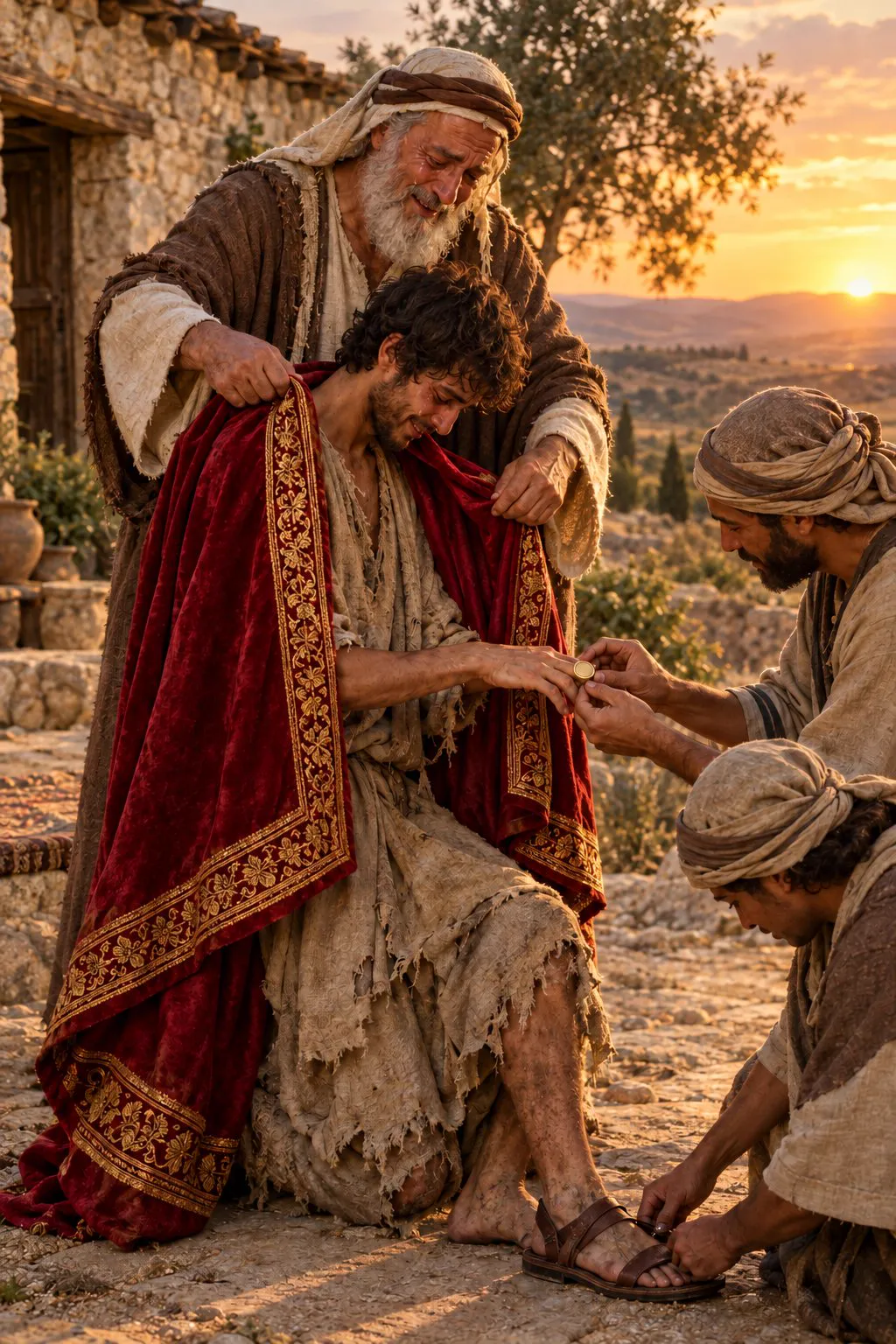
22But the father said to his servants, Bring forth the best robe, and put it on him; and put a ring on his hand, and shoes on his feet:

23And bring hither the fatted calf, and kill it; and let us eat, and be merry:

24For this my son was dead, and is alive again; he was lost, and is found. And they began to be merry.

25Now his elder son was in the field: and as he came and drew nigh to the house, he heard musick and dancing.

26And he called one of the servants, and asked what these things meant.

27And he said unto him, Thy brother is come; and thy father hath killed the fatted calf, because he hath received him safe and sound.

28And he was angry, and would not go in: therefore came his father out, and intreated him.

29And he answering said to his father, Lo, these many years do I serve thee, neither transgressed I at any time thy commandment: and yet thou never gavest me a kid, that I might make merry with my friends:

30But as soon as this thy son was come, which hath devoured thy living with harlots, thou hast killed for him the fatted calf.

31And he said unto him, Son, thou art ever with me, and all that I have is thine.

32It was meet that we should make merry, and be glad: for this thy brother was dead, and is alive again; and was lost, and is found.

Scripture (KJV)

Exodus 17:8–13

8Then came Amalek, and fought with Israel in Rephidim.

9And Moses said unto Joshua, Choose us out men, and go out, fight with Amalek: to morrow I will stand on the top of the hill with the rod of God in mine hand.

10So Joshua did as Moses had said to him, and fought with Amalek: and Moses, Aaron, and Hur went up to the top of the hill.

11And it came to pass, when Moses held up his hand, that Israel prevailed: and when he let down his hand, Amalek prevailed.

12But Moses’ hands were heavy; and they took a stone, and put it under him, and he sat thereon; and Aaron and Hur stayed up his hands, the one on the one side, and the other on the other side; and his hands were steady until the going down of the sun.

13And Joshua discomfited Amalek and his people with the edge of the sword.

Scripture (KJV)

Matthew 17:1–9

1And after six days Jesus taketh Peter, James, and John his brother, and bringeth them up into an high mountain apart,

2And was transfigured before them: and his face did shine as the sun, and his raiment was white as the light.

3And, behold, there appeared unto them Moses and Elias talking with him.

4Then answered Peter, and said unto Jesus, Lord, it is good for us to be here: if thou wilt, let us make here three tabernacles; one for thee, and one for Moses, and one for Elias.

5While he yet spake, behold, a bright cloud overshadowed them: and behold a voice out of the cloud, which said, This is my beloved Son, in whom I am well pleased; hear ye him.

6And when the disciples heard it, they fell on their face, and were sore afraid.

7And Jesus came and touched them, and said, Arise, and be not afraid.

8And when they had lifted up their eyes, they saw no man, save Jesus only.

9And as they came down from the mountain, Jesus charged them, saying, Tell the vision to no man, until the Son of man be risen again from the dead.

Scripture (KJV)

Psalm 133:1–3

1Behold, how good and how pleasant it is for brethren to dwell together in unity!

2It is like the precious ointment upon the head, that ran down upon the beard, even Aaron’s beard: that went down to the skirts of his garments;

3As the dew of Hermon, and as the dew that descended upon the mountains of Zion: for there the LORD commanded the blessing, even life for evermore.

Scripture (KJV)

Romans 8:26–27

26Likewise the Spirit also helpeth our infirmities: for we know not what we should pray for as we ought: but the Spirit itself maketh intercession for us with groanings which cannot be uttered.

27And he that searcheth the hearts knoweth what is the mind of the Spirit, because he maketh intercession for the saints according to the will of God.

Scripture (KJV)

Esther 8:1–8

1On that day did the king Ahasuerus give the house of Haman the Jews’ enemy unto Esther the queen. And Mordecai came before the king; for Esther had told what he was unto her.

2And the king took off his ring, which he had taken from Haman, and gave it unto Mordecai. And Esther set Mordecai over the house of Haman.

3And Esther spake yet again before the king, and fell down at his feet, and besought him with tears to put away the mischief of Haman the Agagite, and his device that he had devised against the Jews.

4Then the king held out the golden sceptre toward Esther. So Esther arose, and stood before the king,

5And said, If it please the king, and if I have found favour in his sight, and the thing seem right before the king, and I be pleasing in his eyes, let it be written to reverse the letters devised by Haman the son of Hammedatha the Agagite, which he wrote to destroy the Jews which are in all the king’s provinces:

6For how can I endure to see the evil that shall come unto my people? or how can I endure to see the destruction of my kindred?

7Then the king Ahasuerus said unto Esther the queen and to Mordecai the Jew, Behold, I have given Esther the house of Haman, and him they have hanged upon the gallows, because he laid his hand upon the Jews.

8Write ye also for the Jews, as it liketh you, in the king’s name, and seal it with the king’s ring: for the writing which is written in the king’s name, and sealed with the king’s ring, may no man reverse.

Dominion Hour · November 3, 2026

From the Teaching

The main points of the teaching from Part 1, summarized from the recording of the service, with exact quotes and the Scripture behind them.

Editor’s Note

The summaries were prepared by the editor from the recording. The quotes are exact words from the recording. The recording itself is not published, and names and stories from the room are left out.

Faith

Trusting the name of the Lord

Ministry Interpretation

The service opened with thanksgiving and with a declaration that strength does not come from horses and chariots, but from the name of the Lord.

The teaching then turned to Abraham, who began to question God while the promise had not yet come. Faith is not passive. It keeps going while the promise is still waiting to be fulfilled.

Quoted in the Service
“Beloved, don’t give up. Keep on pushing. You know the faith journey. The faith journey is not easy. It’s not for babes. It’s for people that are strong in faith.”
Psalm 20:7 (KJV)Referred to in the service

“Some trust in chariots, and some in horses: but we will remember the name of the LORD our God.”

Proverbs 18:10 (KJV)Referred to in the service

“The name of the LORD is a strong tower: the righteous runneth into it, and is safe.”

Genesis 15:1 (KJV)Referred to in the service

“After these things the word of the LORD came unto Abram in a vision, saying, Fear not, Abram: I am thy shield, and thy exceeding great reward.”

The mountain

The manifest presence

Ministry Interpretation

God is everywhere, but the teaching draws a line between His presence everywhere and His manifest presence. That presence is found where people give Him their full attention, and it often costs something: leaving comfort behind, prayer, and fasting.

Moses would not go forward without the presence of God. The teaching calls each believer to be just as conscious of it.

Quoted in the Service
“God is in everywhere, but His presence is not in every place. The manifest presence are in specific places.”
Quoted in the Service
“Anytime you want to see something from the Lord, the Lord expects you to move.”
Exodus 33:15 (KJV)Referred to in the service

“And he said unto him, If thy presence go not with me, carry us not up hence.”

Love

A love without conditions

Ministry Interpretation

The teaching asks what kind of love we bring to God. Love that comes to Him only for what it wants is a love with conditions.

When the Lord sees a heart that loves Him for Himself, He freely gives all things, as Romans 8 says. Nothing is able to separate that believer from His love.

Quoted in the Service
“When the Lord sees your heart, that it is not a conditional love, a love that comes with conditions, strings attached, He will, he will, he will freely give you all things.”
Romans 8:32 (KJV)Referred to in the service

“He that spared not his own Son, but delivered him up for us all, how shall he not with him also freely give us all things?”

Romans 8:38–39 (KJV)Referred to in the service

“For I am persuaded, that neither death, nor life, nor angels, nor principalities, nor powers, nor things present, nor things to come, Nor height, nor depth, nor any other creature, shall be able to separate us from the love of God, which is in Christ Jesus our Lord.”

Unity

Peace is a person

Ministry Interpretation

Psalm 133 shows the blessing God commands where brethren dwell together in unity. The teaching says it is the prayer of intercessors and of the church that brings down the presence and glory of God, and with it unity.

The peace the world is looking for will not come from talks between leaders. Peace is a person.

Quoted in the Service
“The word peace is not a summit talk. The word peace is a person. His name is Jesus, the Prince of Peace.”
Psalm 133:3 (KJV)Referred to in the service

“As the dew of Hermon, and as the dew that descended upon the mountains of Zion: for there the LORD commanded the blessing, even life for evermore.”

Isaiah 9:6 (KJV)Added by the editor

“For unto us a child is born, unto us a son is given: and the government shall be upon his shoulder: and his name shall be called Wonderful, Counsellor, The mighty God, The everlasting Father, The Prince of Peace.”

The lost garment

Out of the Father’s presence

Ministry Interpretation

The son belonged to a rich father, but through disobedience he lost his precious garment and was left in filthy rags. The teaching sets this beside the garment of a slave and the garment of a prisoner: clothing that marks a glory that has been taken.

A fish taken out of water dies. In the same way, it is the presence of God that sustains a person and keeps them alive.

Quoted in the Service
“Your heavenly father is rich, but because of disobedience, he lost the precious garment, and he’s covered himself with filthy rags.”
Quoted in the Service
“It is the presence of God that sustains you. It is the presence of God that keep you alive.”
Isaiah 64:6 (KJV)Added by the editor

“But we are all as an unclean thing, and all our righteousnesses are as filthy rags; and we all do fade as a leaf; and our iniquities, like the wind, have taken us away.”

Psalm 16:11 (KJV)Referred to in the service

“Thou wilt shew me the path of life: in thy presence is fulness of joy; at thy right hand there are pleasures for evermore.”

The ring

The Father’s approval

Ministry Interpretation

In the Old Testament a ring was used to sign and seal documents. Kings, fathers and nobles each had one. To be given a ring was to be given authority and power.

When the king took off his ring and gave it to Mordecai, a decree sealed with it could not be reversed. The teaching applies this to the Father’s approval. What He approves cannot be revoked, so it matters to please Him.

Quoted in the Service
“When the heavenly Father approve your marriage, approve your ministry, approve that connection, approve that contract, no devil, no power can revoke it.”
Esther 8:2 (KJV)Referred to in the service

“And the king took off his ring, which he had taken from Haman, and gave it unto Mordecai. And Esther set Mordecai over the house of Haman.”

Esther 8:8 (KJV)Referred to in the service

“Write ye also for the Jews, as it liketh you, in the king's name, and seal it with the king's ring: for the writing which is written in the king's name, and sealed with the king's ring, may no man reverse.”

The sandals

Feet that carry you

Ministry Interpretation

Sandals do more than beautify the feet. They protect them from hurt. The feet are a means of transport and a connection, and they carry a person to the places and people God has for them.

The prayer was for spiritual sandals to tread upon serpents and scorpions, and for connections that the enemy had torn to be restored. The Father opens the way back into His presence.

Quoted in the Service
“Your sandals will not just beautify your feet, but it will protect your feet from hurting.”
Luke 10:19 (KJV)Referred to in the service

“Behold, I give unto you power to tread on serpents and scorpions, and over all the power of the enemy: and nothing shall by any means hurt you.”

Psalm 122:1 (KJV)Referred to in the service

“I was glad when they said unto me, Let us go into the house of the LORD.”

Mercy

Not by wishing

Ministry Interpretation

Wishing for blessing does not bring it. Romans 9 shows that blessing rests on God, who shows mercy and compassion.

Before resisting the enemy, the believer must first align with the will of the Father and submit to God. Many fight and still lose their battles because they have not first submitted.

Quoted in the Service
“It is not about wishing. It is about God showing you compassion.”
Romans 9:15–16 (KJV)Referred to in the service

“For he saith to Moses, I will have mercy on whom I will have mercy, and I will have compassion on whom I will have compassion. So then it is not of him that willeth, nor of him that runneth, but of God that sheweth mercy.”

James 4:7 (KJV)Referred to in the service

“Submit yourselves therefore to God. Resist the devil, and he will flee from you.”

Sonship

Abba, Father

Ministry Interpretation

Those who are led by the Spirit of God are the sons of God. They have not received a spirit of bondage and fear, but the Spirit of adoption.

The cry “Abba, Father” speaks of the closeness between a father and a son. The son who came home asking to be a servant was received as a son.

Quoted in the Service
“It means intimate relationship with a father and a son.”
Romans 8:14–15 (KJV)Referred to in the service

“For as many as are led by the Spirit of God, they are the sons of God. For ye have not received the spirit of bondage again to fear; but ye have received the Spirit of adoption, whereby we cry, Abba, Father.”

Part 1

Come Back to the Father

In Luke 15 the son prepares to ask for a servant’s place. His father runs to meet him. That welcome is the call to come back to the Father in prayer.

A lone figure on a mountaintop with arms lifted in prayer beneath golden rays

Intercession

Intercession on the mountain

Ministry Interpretation

The service began on the mountain, with the requests of others carried before the Lord.

Two mountain scenes frame the teaching. Moses lifts his hand while Joshua fights below, and Jesus takes Peter, James, and John up a high mountain. The first shows why an intercessor keeps praying for others. The second shows the disciples listening to the beloved Son.

Quoted in the Service
“You know, God needs our attention. A lot of things has distracted us, and we are not growing.”
Exodus 17:11 (KJV)Referred to in the service

“And it came to pass, when Moses held up his hand, that Israel prevailed: and when he let down his hand, Amalek prevailed.”

Matthew 17:5 (KJV)Referred to in the service

“While he yet spake, behold, a bright cloud overshadowed them: and behold a voice out of the cloud, which said, This is my beloved Son, in whom I am well pleased; hear ye him.”

Editor’s Note

Read Exodus 17:8–13 and Matthew 17:1–9 (KJV)

For discussion: Whose name or need will you bring before the Lord when you set aside time to pray?

Intercession

Praying for the household

Ministry Interpretation

The prayer began with thanksgiving for God’s care over families and the church, then confession of sin and a request for the Holy Ghost to guide the prayers. The call was to pray for renewed love for God and fresh zeal for prayer.

Psalm 133 brings intercession into the home: husbands and wives turned against one another, and children and parents grown apart. The prayer asks Jesus, the Prince of Peace, to reign in those homes.

Quoted in the Service· Prayer
“Today I pray that there will be peace in your home. There will be peace wherever you are.”
Psalm 133:1 (KJV)Referred to in the service

“Behold, how good and how pleasant it is for brethren to dwell together in unity!”

Romans 8:26 (KJV)Shown in the service guide

“Likewise the Spirit also helpeth our infirmities: for we know not what we should pray for as we ought: but the Spirit itself maketh intercession for us with groanings which cannot be uttered.”

Editor’s Note

Read Psalm 133:1–3 and Romans 8:26–27 (KJV)

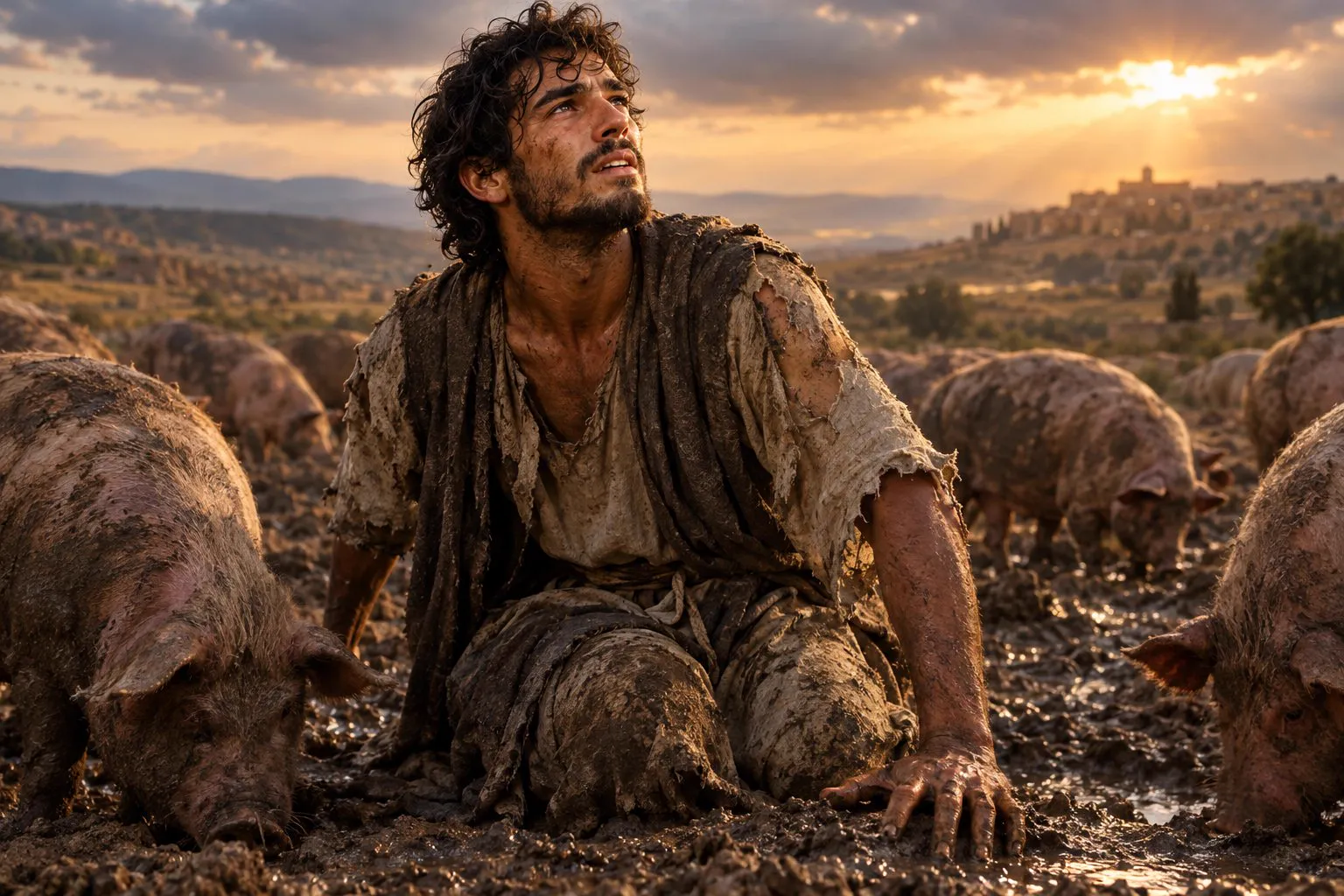
The son among the swine lifts his eyes toward the light and begins to rise to go home

Repentance

When the son came to himself

Ministry Interpretation

The younger son had spent his inheritance. Hungry in a field where he fed swine, he remembered that his father’s hired servants had bread to spare. He decided what he would say. Then he got up and went home.

This is a return to the place of prayer, fasting, and consecration. Time with the Father can be set apart wherever a person is.

Luke 15:17 (KJV)Referred to in the service

“And when he came to himself, he said, How many hired servants of my father’s have bread enough and to spare, and I perish with hunger!”

Luke 15:18 (KJV)Referred to in the service

“I will arise and go to my father, and will say unto him, Father, I have sinned against heaven, and before thee,”

Editor’s Note

Read Luke 15:11–21 (KJV)

For discussion: What did the son remember about his father’s house? What did that memory move him to do?

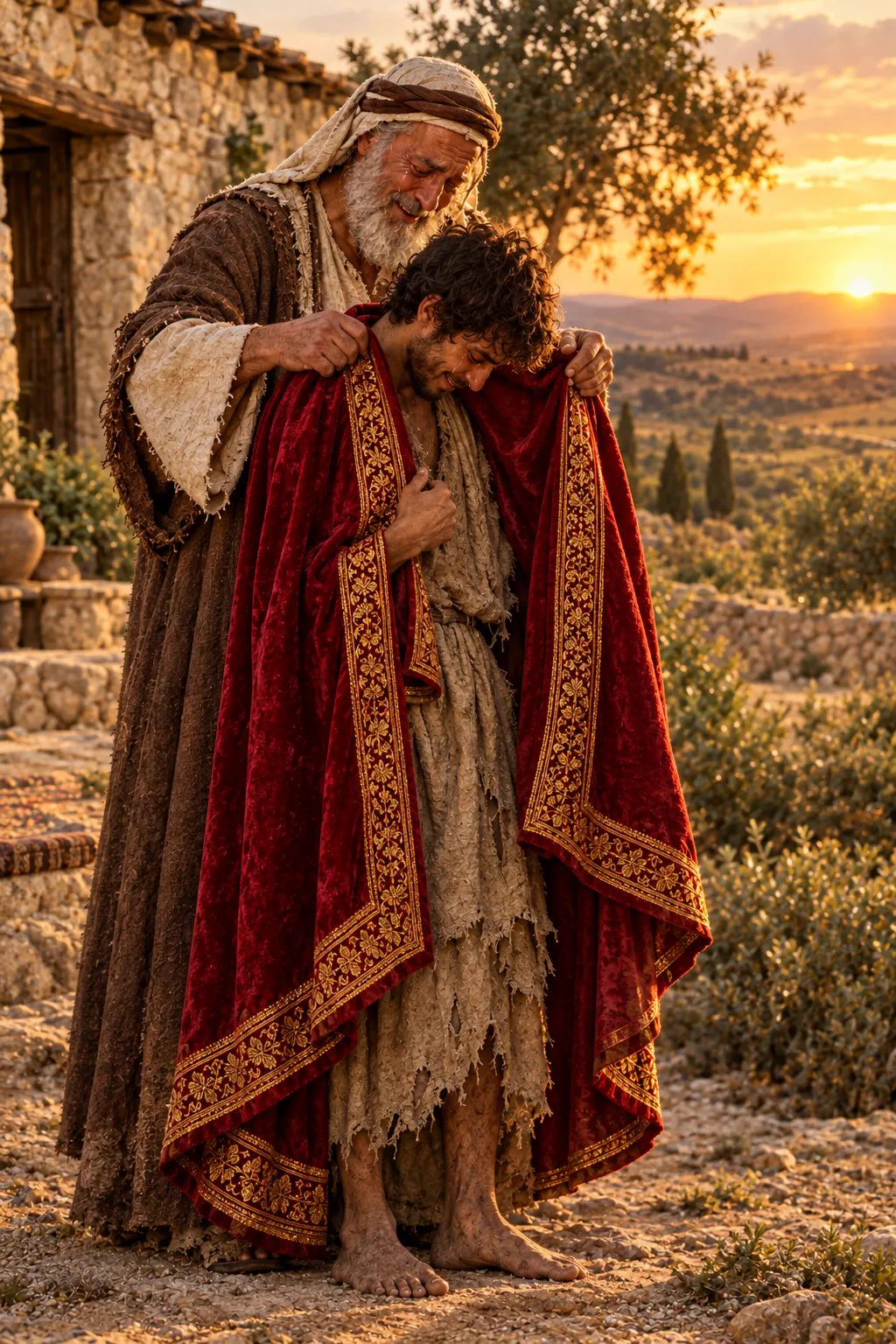
The father wraps the best robe around his returning son

The first gift

The best robe

Ministry Interpretation

The father saw his son a long way off. He ran, embraced him, and kissed him. The son confessed that he had sinned. The father called for the best robe and told the servants to put it on him.

The robe is “a garment of righteousness.” The clothes of a prisoner stand in contrast to the robe the father chose for his son. The robe speaks of restored honor and acceptance in the father’s house.

Quoted in the Service
“Let your garment be restored. Let your honor be restored.”
Luke 15:20 (KJV)Referred to in the service

“And he arose, and came to his father. But when he was yet a great way off, his father saw him, and had compassion, and ran, and fell on his neck, and kissed him.”

Isaiah 61:10 (KJV)Added by the editor

“I will greatly rejoice in the LORD, my soul shall be joyful in my God; for he hath clothed me with the garments of salvation, he hath covered me with the robe of righteousness, as a bridegroom decketh himself with ornaments, and as a bride adorneth herself with her jewels.”

Editor’s Note

Read Luke 15:20–24 (KJV)

For discussion: What had the father already done for his son before the servants brought the robe?

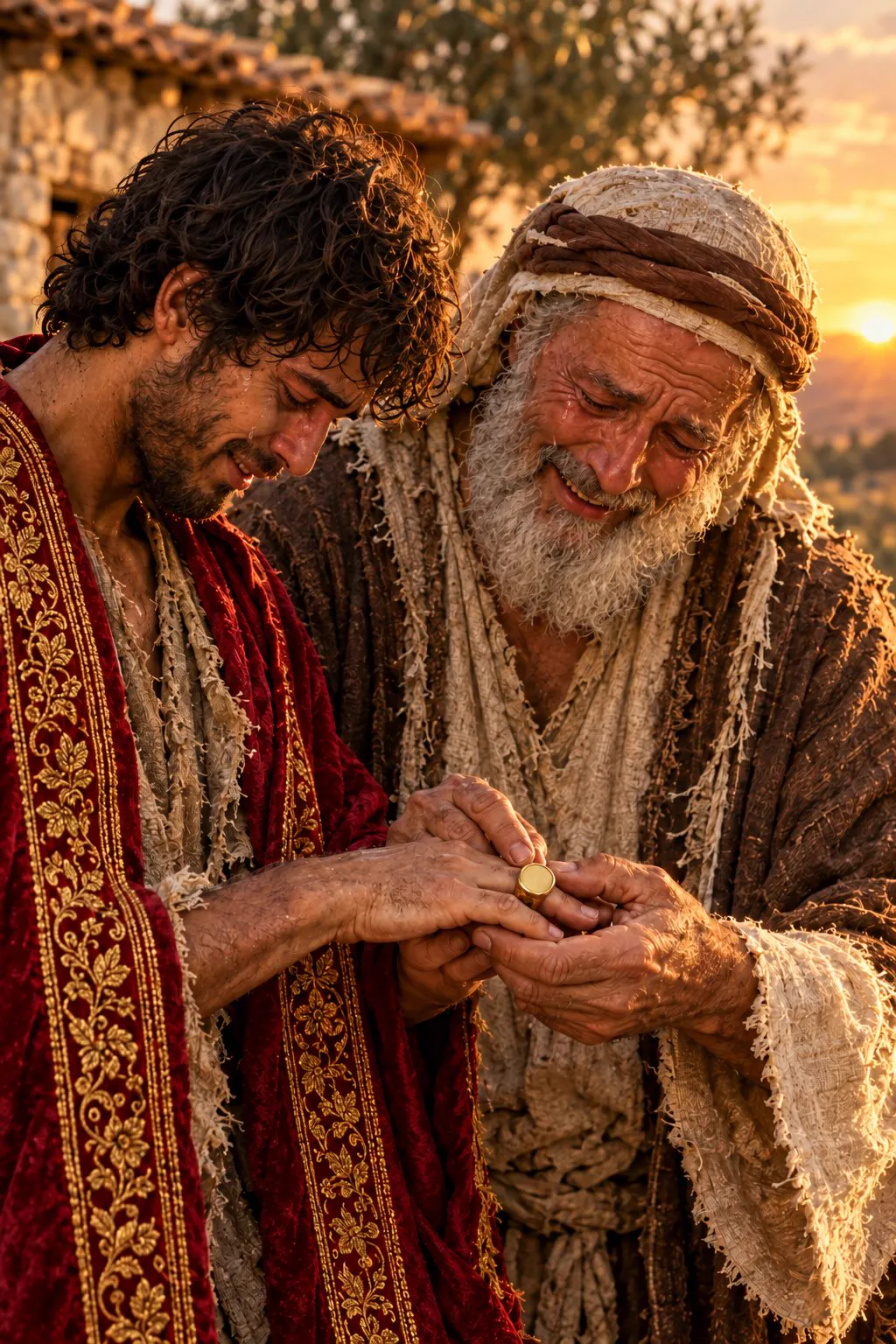
The father puts a signet ring on his son’s finger

The second gift

The ring on his hand

Ministry Interpretation

The ring speaks of authority and the father’s approval. Esther shows this. The king gave Mordecai his ring and later authorized letters concerning the Jews to be written in his name and sealed with it.

Power in the hands of a proud person is dangerous. Each person is called to bring their own attitude before God.

Quoted in the Service
“Today, put on the garment of humility.”
Esther 8:2 (KJV)Referred to in the service

“And the king took off his ring, which he had taken from Haman, and gave it unto Mordecai. And Esther set Mordecai over the house of Haman.”

Esther 8:8 (KJV)Referred to in the service

“Write ye also for the Jews, as it liketh you, in the king’s name, and seal it with the king’s ring: for the writing which is written in the king’s name, and sealed with the king’s ring, may no man reverse.”

Editor’s Note

Read Esther 8:1–8 (KJV)

For discussion: How does the king’s ring help explain what it means to act with someone else’s authority?

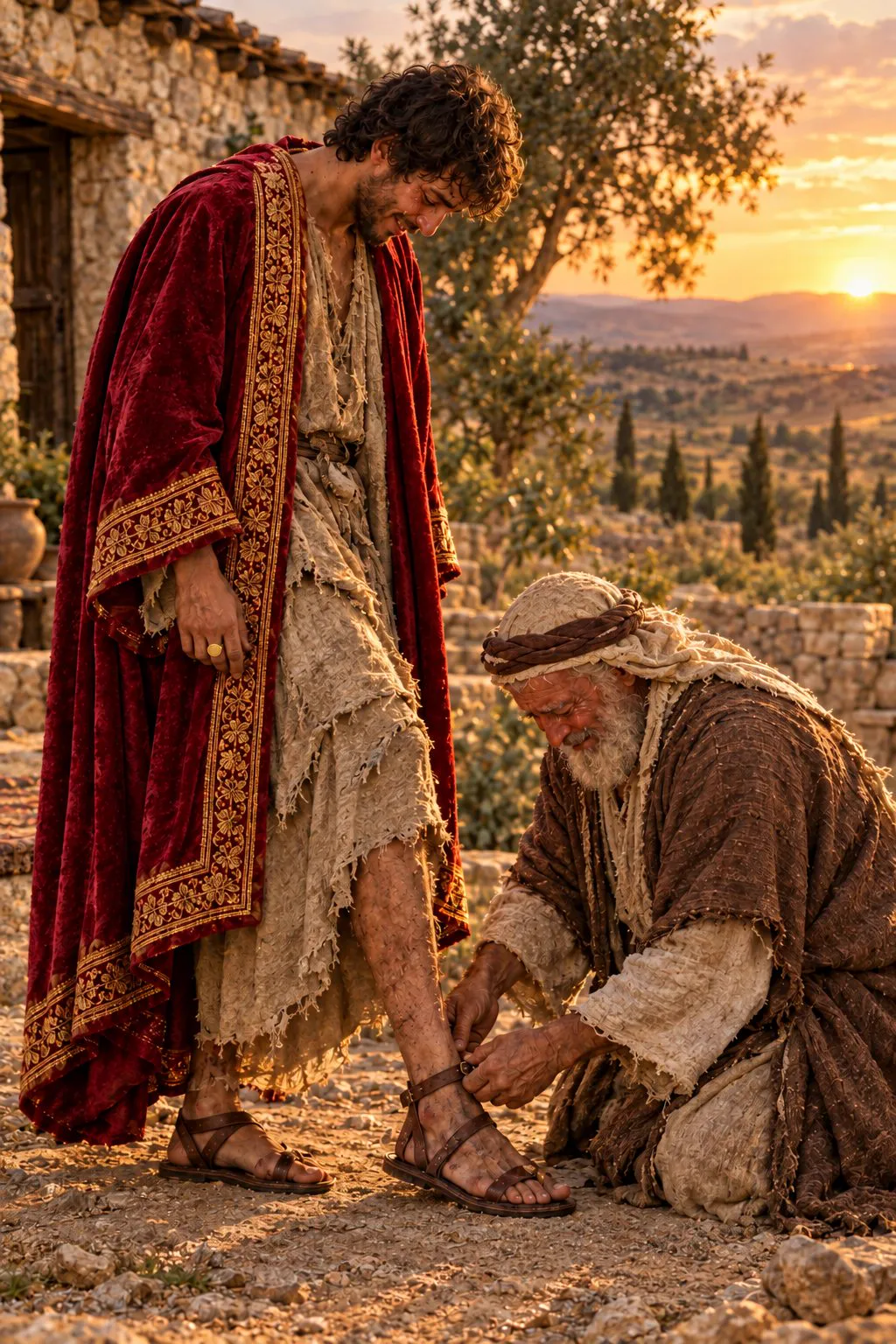
The father kneels and fastens sandals on his son’s feet

The third gift

Sandals on his feet

Ministry Interpretation

Luke 15:22 uses the word “shoes” in the King James Version. The teaching calls them sandals. A person can have the mountain in mind, but how will they get there if their feet hurt?

Sandals protect the feet that carry a person to others. The prayer asks for broken connections to be restored. The image then returns to the son, free to walk into his father’s presence again.

Quoted in the Service
“It is your feet that will lead you. It is your feet that will carry you.”
Luke 15:22 (KJV)Referred to in the service

“But the father said to his servants, Bring forth the best robe, and put it on him; and put a ring on his hand, and shoes on his feet:”

Luke 15:24 (KJV)Added by the editor

“For this my son was dead, and is alive again; he was lost, and is found. And they began to be merry.”

Editor’s Note

Read Luke 15:22–24 (KJV)

For discussion: The father called for a feast after giving the three gifts. What reason did he give for celebrating?

The father clothes his returning son in the best robe while servants put a ring on his hand and sandals on his feet

Closing prayer · Mercy and restoration

My Father, my Father

Ministry Interpretation

The closing prayer returns to the moment the father saw his son. Children, marriages, health, and livelihoods are brought before the Father in prayer.

Quoted in the Service
“You know that it was compassion that moved the father to restore.”
Romans 8:15 (KJV)Shown in the service guide

“For ye have not received the spirit of bondage again to fear; but ye have received the Spirit of adoption, whereby we cry, Abba, Father.”

Quoted in the Service· Prayers
  • “Show me mercy, show me compassion. Let your compassionate hand touch me and deliver me.”
  • “May we begin to celebrate instead of weeping.”
  • “Father, step in for me. Deliver me in the name of Jesus.”

Additional learning

The Robe, the Signet Ring, and the Sandals

A word study of Luke 15:22 using the Greek and Hebrew lexicon and concordance, with every verse in full from the King James Version.

Editor’s Note

This word study was prepared by the editor. It was not part of the service.

An open Bible, a scroll, and an oil lamp on a stone ledge with a signet ring, robe, and sandal nearby
Luke 15:22 (KJV)Referred to in the service

“But the father said to his servants, Bring forth the best robe, and put it on him; and put a ring on his hand, and shoes on his feet:”

The best robe

Additional learning

The best robe

Greek and Hebrew words

prōtosPRO-tosStrong’s G4413

“Best” is prōtos (Strong’s G4413), meaning “foremost (in time, place, order or importance).” It is also translated “first” and “chief.”

stolēstoh-LAYStrong’s G4749

“Robe” is stolē (G4749), which Thayer defines as “a loose outer garment for men extending to the feet, worn by kings, priests, and persons of rank.” It occurs 9 times in 8 verses of the Textus Receptus.

mᵉʻîylmeh-EELStrong’s H4598

In the Hebrew of Isaiah 61:10, “robe” is mᵉʻîyl (H4598), the upper outer garment worn by men of rank and by the high priest.

Meaning

This was the first, foremost robe of the house. It meant restored honour, and it covered the rags of the far country. The father supplied it. The son did not bring it.

Isaiah 61:10 (KJV)

“I will greatly rejoice in the LORD, my soul shall be joyful in my God; for he hath clothed me with the garments of salvation, he hath covered me with the robe of righteousness, as a bridegroom decketh himself with ornaments, and as a bride adorneth herself with her jewels.”

Zechariah 3:4 (KJV)

“And he answered and spake unto those that stood before him, saying, Take away the filthy garments from him. And unto him he said, Behold, I have caused thine iniquity to pass from thee, and I will clothe thee with change of raiment.”

Revelation 7:14 (KJV)

“And I said unto him, Sir, thou knowest. And he said to me, These are they which came out of great tribulation, and have washed their robes, and made them white in the blood of the Lamb.”

The signet ring

Additional learning

The signet ring

Greek and Hebrew words

daktyliosdak-TOO-lee-osStrong’s G1146

daktylios (G1146) means “a finger-ring.” It occurs only once in the Textus Receptus, here in Luke 15:22.

ṭabbaʻathtab-BAH-athStrong’s H2885

The Old Testament word for the king’s ring in Esther and Genesis is ṭabbaʻath (H2885). It properly means “a seal (as sunk into the wax), i.e. signet,” and it is a “symbol of authority.”

Meaning

A signet ring sealed documents in the family’s name. Putting it on the son’s hand gave him back his standing and the authority to act for the house.

Genesis 41:42 (KJV)

“And Pharaoh took off his ring from his hand, and put it upon Joseph’s hand, and arrayed him in vestures of fine linen, and put a gold chain about his neck;”

Esther 8:2 (KJV)

“And the king took off his ring, which he had taken from Haman, and gave it unto Mordecai. And Esther set Mordecai over the house of Haman.”

Esther 8:8 (KJV)

“Write ye also for the Jews, as it liketh you, in the king’s name, and seal it with the king’s ring: for the writing which is written in the king’s name, and sealed with the king’s ring, may no man reverse.”

Haggai 2:23 (KJV)

“In that day, saith the LORD of hosts, will I take thee, O Zerubbabel, my servant, the son of Shealtiel, saith the LORD, and will make thee as a signet: for I have chosen thee, saith the LORD of hosts.”

Ephesians 1:13 (KJV)

“In whom ye also trusted, after that ye heard the word of truth, the gospel of your salvation: in whom also after that ye believed, ye were sealed with that holy Spirit of promise,”

Notice that Joseph in Genesis 41:42 receives a ring and a robe together, just as the returning son does.

Shoes (sandals) on his feet

Additional learning

Shoes (sandals) on his feet

Greek and Hebrew words

hypodēmahoop-OD-ay-mahStrong’s G5266

“Shoes” in Luke 15:22 is hypodēma (G5266), “something bound under the feet, i.e. a shoe or sandal.” It occurs 10 times in 10 verses.

sandalionsan-DAL-ee-onStrong’s G4547

The “sandals” in Mark 6:9 and Acts 12:8 are sandalion (G4547), “a sole made of wood or leather… bound on with thongs.” It occurs only in those 2 verses.

Meaning

Shoes marked the son as a free member of the household, not a servant. Bible commentators often note that slaves commonly went barefoot. That is historical background, not something the verse itself says. In Scripture, shod feet also mean being ready to walk where God leads.

Exodus 12:11 (KJV)

“And thus shall ye eat it; with your loins girded, your shoes on your feet, and your staff in your hand; and ye shall eat it in haste: it is the LORD’s passover.”

Mark 6:9 (KJV)

“But be shod with sandals; and not put on two coats.”

Acts 12:8 (KJV)

“And the angel said unto him, Gird thyself, and bind on thy sandals. And so he did. And he saith unto him, Cast thy garment about thee, and follow me.”

Ephesians 6:15 (KJV)

“And your feet shod with the preparation of the gospel of peace;”

Luke 3:16 (KJV)

“John answered, saying unto them all, I indeed baptize you with water; but one mightier than I cometh, the latchet of whose shoes I am not worthy to unloose: he shall baptize you with the Holy Ghost and with fire:”

Luke 3:16 uses the same word, hypodēma.

Additional learning

What all three mean

Meaning

The son asked to be a servant, and the father made him a son. The robe gave him back his honour and righteousness, the ring his authority and seal, and the shoes his freedom and readiness to walk.

Galatians 4:7 (KJV)

“Wherefore thou art no more a servant, but a son; and if a son, then an heir of God through Christ.”

Romans 8:15 (KJV)

“For ye have not received the spirit of bondage again to fear; but ye have received the Spirit of adoption, whereby we cry, Abba, Father.”

Part 2

The Mountain Experience

From the mountain, the church’s requests were lifted before the Father. As the rain fell, those who had received prayer took their turn to pray for the intercessor.

Mountain intercession

Lifted hands on the mountain

Ministry Interpretation

The prayer was offered on behalf of the church and those joining from their homes and workplaces. With hands lifted, it covered healing, employment, marriage, and deliverance.

Moses stands on the hill while Joshua fights below. When Moses’ hands grow heavy, Aaron and Hur give him a stone to sit on and hold up his hands until sunset.

Quoted in the Service
“I came here representing you, representing the church.”
Quoted in the Service· Prayer
“With my hands lifted up, I pray for your victory.”
Exodus 17:11 (KJV)Referred to in the service

“And it came to pass, when Moses held up his hand, that Israel prevailed: and when he let down his hand, Amalek prevailed.”

Exodus 17:12 (KJV)Referred to in the service

“But Moses’ hands were heavy; and they took a stone, and put it under him, and he sat thereon; and Aaron and Hur stayed up his hands, the one on the one side, and the other on the other side; and his hands were steady until the going down of the sun.”

Editor’s Note

For reflection: Who is facing a battle today? Bring that person’s name and request before the Father.

Broken bread, a clay cup of wine, and a vial of anointing oil beside an open Bible on a mountainside

Communion and anointing

The bread, the cup, and the oil

Service Instruction

Have your anointing oil ready and, if you have them, your Communion bread and wine. Prayer is offered before Communion and the anointing.

Ministry Interpretation

The bread and wine are fellowship with the Lord. The bread is the body of Christ, the wine is His blood, and the anointing oil is a sign of the Holy Ghost.

Quoted in the Service· Prayer
“It is my prayer that as we have returned to the Lord, may God show us mercy, have compassion on us.”
1 Corinthians 10:16 (KJV)Shown in the service guide

“The cup of blessing which we bless, is it not the communion of the blood of Christ? The bread which we break, is it not the communion of the body of Christ?”

The returning son

The father’s gifts restored

Ministry Interpretation

In the first teaching, the son came home to confess his sin, and his father ran to meet him. On the mountain, the teaching returns to the father’s call for the robe, the ring, and shoes for his son.

The garment is a garment of honor, a garment of praise, and a garment of favor. The prayer covers those who have lost an opportunity, families under pressure, and those asking God to turn a battle in their favor.

Quoted in the Service· Declaration
“The Lord is putting a new song in your mouth. A new song.”
Luke 15:22 (KJV)Referred to in the service

“But the father said to his servants, Bring forth the best robe, and put it on him; and put a ring on his hand, and shoes on his feet:”

Isaiah 61:3 (KJV)Added by the editor

“To appoint unto them that mourn in Zion, to give unto them beauty for ashes, the oil of joy for mourning, the garment of praise for the spirit of heaviness; that they might be called trees of righteousness, the planting of the LORD, that he might be glorified.”

Editor’s Note

For reflection: What do the father’s gifts tell you about the place he gave his son when he came home?

A prayer to be remembered

When the king could not sleep

Ministry Interpretation

For those still waiting for a promised opportunity, the teaching turns to Esther 6. The king could not sleep and asked for the court records to be read aloud. There he heard how Mordecai had uncovered a plot against his life.

The king sent Haman to honor Mordecai publicly. The prayer carries that story to the person waiting for work and to the husband or wife whose kindness has been forgotten at home.

Quoted in the Service· Prayer
“May you be remembered.”
Esther 6:1 (KJV)Referred to in the service

“On that night could not the king sleep, and he commanded to bring the book of records of the chronicles; and they were read before the king.”

Esther 6:3 (KJV)Referred to in the service

“And the king said, What honour and dignity hath been done to Mordecai for this? Then said the king’s servants that ministered unto him, There is nothing done for him.”

A long banquet table in a sunlit courtyard with one chair pulled out and waiting

The hand of mercy

A place at the king’s table

Ministry Interpretation

From Mordecai the teaching turns to Mephibosheth, Jonathan’s son. David asked whether anyone remained of Saul’s house to whom he could show kindness for Jonathan’s sake. When he learned that Mephibosheth was in Lodebar, he sent for him.

David remembered his bond with Jonathan. His kindness gave Jonathan’s son land to live on and a place at his own table. Through the story, the words “the hand of mercy” sound again and again.

Quoted in the Service· Prayer
“Remember me by your mercies.”
2 Samuel 9:7 (KJV)Referred to in the service

“And David said unto him, Fear not: for I will surely shew thee kindness for Jonathan thy father’s sake, and will restore thee all the land of Saul thy father; and thou shalt eat bread at my table continually.”

Golden rain falling over a mountaintop and valley in rays of light

On the mountain

When the rain came

Ministry Interpretation

Rain fell on the mountain during the service. The rain was received as “a shower of blessing.”

Moses came down from Sinai with his face shining after speaking with the Lord (Exodus 34:29–35). Psalm 133 describes the oil on Aaron’s head, and attention turns to how far it ran.

That downward flow expresses the prayer for everyone listening. What is received on the mountain, the Father is asked to share with the people represented there.

Quoted in the Service· Prayer
“I am receiving it on the behalf of your people.”
Psalm 133:2 (KJV)Referred to in the service

“It is like the precious ointment upon the head, that ran down upon the beard, even Aaron’s beard: that went down to the skirts of his garments;”

Ezekiel 34:26 (KJV)Added by the editor

“And I will make them and the places round about my hill a blessing; and I will cause the shower to come down in his season; there shall be showers of blessing.”

Prayer for others

Standing in the gap

Ministry Interpretation

Some pray on the mountain while others work or sleep. Job brought his children before God, and his restoration came when he prayed for his friends (Job 1:5 and 42:10).

The prayer reaches even those who could not join the service, including those in mourning. It covers families and then America, Ghana, England, Jamaica, and Trinidad.

Jesus is at the Father’s right hand. The One to whom believers belong is Himself interceding for them.

Job 42:10 (KJV)Referred to in the service

“And the LORD turned the captivity of Job, when he prayed for his friends: also the LORD gave Job twice as much as he had before.”

Romans 8:34 (KJV)Referred to in the service

“Who is he that condemneth? It is Christ that died, yea rather, that is risen again, who is even at the right hand of God, who also maketh intercession for us.”

Editor’s Note

For reflection: Whose absence have you noticed? Remember that person by name in prayer.

The congregation responds

Praying for the intercessors

Ministry Interpretation

Near the close, those who had received prayer turned to pray a blessing over the one who had spent the morning praying for them. The church also remembered those who had spent nights in prayer on its behalf. The floor then opened for testimonies.

James 5:16 (KJV)Added by the editor

“Confess your faults one to another, and pray one for another, that ye may be healed. The effectual fervent prayer of a righteous man availeth much.”

Study workbook

Ten Questions to Think Through

These are not memory questions. Read the verses, choose the answer you believe is right, then read the explanation. Each part ends with a personal reflection.

Editor’s Note

The questions and explanations were prepared by the editor from the service guide. They were not part of the service.

0 of 10 answered

Workbook · Part 1 · The son returns

Come Back to the Father

Read Luke 15:11–24, Esther 3:10 and 8:1–8, and Matthew 17:1–9 (KJV).

An open journal and pen beside a Bible on a hillside at sunrise

Questions 1–3 · The father’s three gifts

Luke 15:22 (KJV)Referred to in the service

“But the father said to his servants, Bring forth the best robe, and put it on him; and put a ring on his hand, and shoes on his feet:”

The best robe

Zechariah 3:4 (KJV)

“And he answered and spake unto those that stood before him, saying, Take away the filthy garments from him. And unto him he said, Behold, I have caused thine iniquity to pass from thee, and I will clothe thee with change of raiment.”

The son came home in the clothes of the far country, and the father did not send him to wash and change first. In Zechariah 3:4, who takes away the filthy garment, and who gives the new one? What does that say about the robe in Luke 15?

The ring on his hand

Esther 3:10 (KJV)

“And the king took his ring from his hand, and gave it unto Haman the son of Hammedatha the Agagite, the Jews’ enemy.”

Esther 8:2 (KJV)

“And the king took off his ring, which he had taken from Haman, and gave it unto Mordecai. And Esther set Mordecai over the house of Haman.”

The ring Mordecai received had first been on Haman’s hand. The teaching warns about power in the hands of a proud person: “Today, put on the garment of humility.” What does the ring’s history teach about carrying the Father’s authority?

Sandals on his feet

Isaiah 52:7 (KJV)

“How beautiful upon the mountains are the feet of him that bringeth good tidings, that publisheth peace; that bringeth good tidings of good, that publisheth salvation; that saith unto Zion, Thy God reigneth!”

The son had already walked all the way home. Why would the father give him shoes after the journey was over?

The father’s interruption

Luke 15:19 (KJV)

“And am no more worthy to be called thy son: make me as one of thy hired servants.”

Luke 15:21 (KJV)

“And the son said unto him, Father, I have sinned against heaven, and in thy sight, and am no more worthy to be called thy son.”

The son rehearsed “make me as one of thy hired servants,” but in verse 21 he never says it. The father speaks first. What does the interruption reveal?

While he yet spake

Matthew 17:4–5 (KJV)

“Then answered Peter, and said unto Jesus, Lord, it is good for us to be here: if thou wilt, let us make here three tabernacles; one for thee, and one for Moses, and one for Elias. While he yet spake, behold, a bright cloud overshadowed them: and behold a voice out of the cloud, which said, This is my beloved Son, in whom I am well pleased; hear ye him.”

On the mountain the Father interrupted Peter “while he yet spake,” just as the father in Luke 15 spoke before his son could finish. The service opened with the words, “God needs our attention.” What was being corrected in Peter?

Personal reflection

What will my “I will arise” look like today?

For example, if I am waiting for a job interview, I can lay out my clothes, gather my documents, and practice one interview question.

Saved privately in this browser. It is never sent to L137.

Workbook · Part 2 · Praying for one another

The Mountain Experience

Read Exodus 17:8–13, Esther 6:1–3, 2 Samuel 9:1–8, Psalm 133, Job 42:7–10, and Romans 8:34 (KJV).

Hands held up

Exodus 17:11 (KJV)

“And it came to pass, when Moses held up his hand, that Israel prevailed: and when he let down his hand, Amalek prevailed.”

Exodus 17:12 (KJV)

“But Moses’ hands were heavy; and they took a stone, and put it under him, and he sat thereon; and Aaron and Hur stayed up his hands, the one on the one side, and the other on the other side; and his hands were steady until the going down of the sun.”

Joshua fought with the sword in the valley, yet the outcome followed Moses’ hands on the hill. And Moses himself could not keep his hands up alone. What does this teach about intercession?

When the king could not sleep

Esther 6:1 (KJV)

“On that night could not the king sleep, and he commanded to bring the book of records of the chronicles; and they were read before the king.”

Esther 6:3 (KJV)

“And the king said, What honour and dignity hath been done to Mordecai for this? Then said the king’s servants that ministered unto him, There is nothing done for him.”

Mordecai’s good deed was written down but went unrewarded until a sleepless night. What does Esther 6 say to someone whose faithfulness seems forgotten?

A place at the king’s table

2 Samuel 9:7 (KJV)

“And David said unto him, Fear not: for I will surely shew thee kindness for Jonathan thy father’s sake, and will restore thee all the land of Saul thy father; and thou shalt eat bread at my table continually.”

2 Samuel 9:8 (KJV)

“And he bowed himself, and said, What is thy servant, that thou shouldest look upon such a dead dog as I am?”

Mephibosheth called himself “a dead dog.” The returning son said he was “no more worthy.” What do the two stories have in common?

How far the oil ran

Psalm 133:2 (KJV)

“It is like the precious ointment upon the head, that ran down upon the beard, even Aaron’s beard: that went down to the skirts of his garments;”

The teaching on Psalm 133 draws attention to how far the oil ran on Aaron, and the prayer from the mountain was, “I am receiving it on the behalf of your people.” Why does the distance matter?

Standing in the gap

Job 42:10 (KJV)

“And the LORD turned the captivity of Job, when he prayed for his friends: also the LORD gave Job twice as much as he had before.”

Romans 8:34 (KJV)

“Who is he that condemneth? It is Christ that died, yea rather, that is risen again, who is even at the right hand of God, who also maketh intercession for us.”

Job’s captivity turned “when he prayed for his friends,” the same friends whose words had wounded him. With Romans 8:34 in view, what does this reveal about standing in the gap?

Personal reflection

Who has been praying for me, and what can I ask the Father for on their behalf?

For example, I can set aside five minutes today, name the person before the Father, and ask Him to give them strength and rest.

Saved privately in this browser. It is never sent to L137.

Numbers 6

The Closing Blessing

After the testimonies, the service closed with the blessing the Lord gave Moses for Aaron and his sons to speak over Israel.

A lone robed figure on a hilltop at sunrise with hands extended in blessing over the valley

24The LORD bless thee, and keep thee:

25The LORD make his face shine upon thee, and be gracious unto thee:

26The LORD lift up his countenance upon thee, and give thee peace.

Numbers 6:24–26 · KJV

The congregation shared the grace together, and the room closed with “Shalom.”

Your progress and reflections are saved only in this browser on this device.

Teaching by Prophet Prince Amo David · Dominion Hour